


The fires in Los Angeles have exposed some real limitations that were once unfathomable. As firefighters from across the region joined in to help fight the fires, they soon realized that the unprecedented stress they were putting on the water supplies flowing to the hydrants overwhelmed what was literally in the tank.
The suburban hydrant system in Los Angeles was never built to handle raging wildfires that might blow in from the surrounding forests and consume neighborhoods and communities.
The truth is, however, that most non-rural water systems have a similar limiting infrastructure.
In an article posted recently in the LA Times (“Why Hydrants Ran Dry As Firefighters Battled California’s Deadly Fires“), Kathryn Sorensen, Director of Research at Arizona State University’s Kyl Center for Water Policy, said, “Local water systems are usually designed to fight local, small-scale fires over a limited time period.”
This reminds me of what we faced right here in Baltimore 121 years ago, when we experienced one of our city’s greatest conflagrations. On February 7, 1904, a fire broke out in the John E. Hurst & Company building, where an explosion dispersed flames to neighboring residential and business buildings.
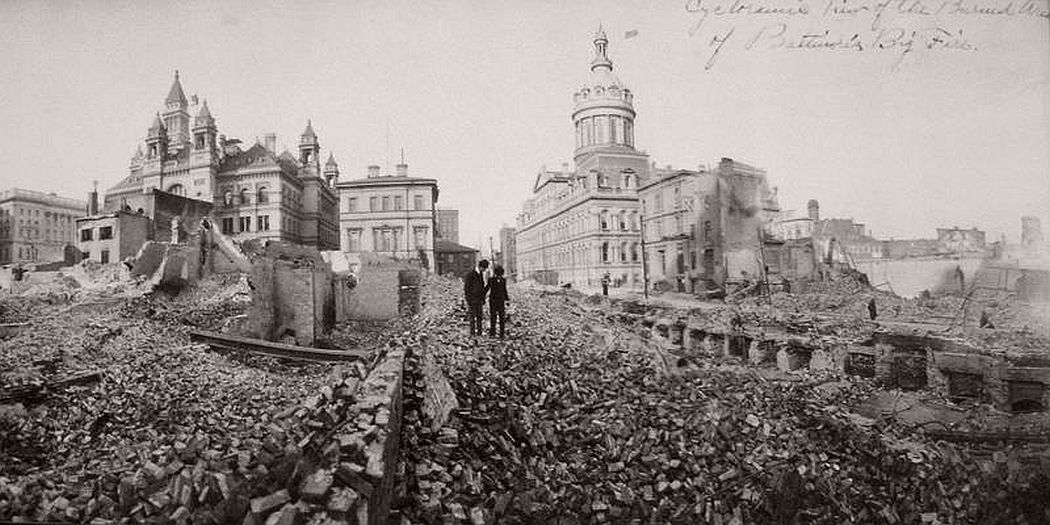
As was the case in LA, the all-call was placed for help. Fire companies as far away as Philadelphia and Altoona, Pennsylvania rushed to help extinguish the fire, only to learn that the couplings on their hoses were incompatible with the hydrants in Baltimore City. They were helpless to assist.
Again- much like the situation in LA, this problem was not isolated to one city. It was a commonly accepted practice that hydrants and hoses were, well, provincial. There was never any real concern that a fire so large as the one in Baltimore (and, today, in Los Angeles), would require the assistance from multiple, out-of-state units.
We are still learning, even a century later, that instant catastrophes such as these can be larger than our imaginations as we plan and budget for infrastructure upgrades.
Yes, in 1904, we began to make changes after the fire so that the coupling issue would no longer inhibit outside fire companies to assist. And, in LA and elsewhere throughout the United States, especially those suburban and urban communities that border on forests and more natural settings, we can expect change to come so that we are better prepared to fight such fires.
We are left wondering, however, what might be next that we find ourselves unprepared to handle. Perhaps it is time to be more proactive to imagine the unimaginable, so that such devastations are limited – if not prevented entirely – from happening again.
It’s a tall order, for sure. It requires more money, which taxes (literally and figuratively) our communities and its residents. But we need to consider such proposals seriously.
Reactions to tragedies never save the lives of those lost. If something so unfathomable could happen in 1904, and once again in 2025, we can be certain it will happen again in the future if unchecked and unimagined.


 Rus VanWestervelt
Leave a reply to Shawnerly Cancel reply